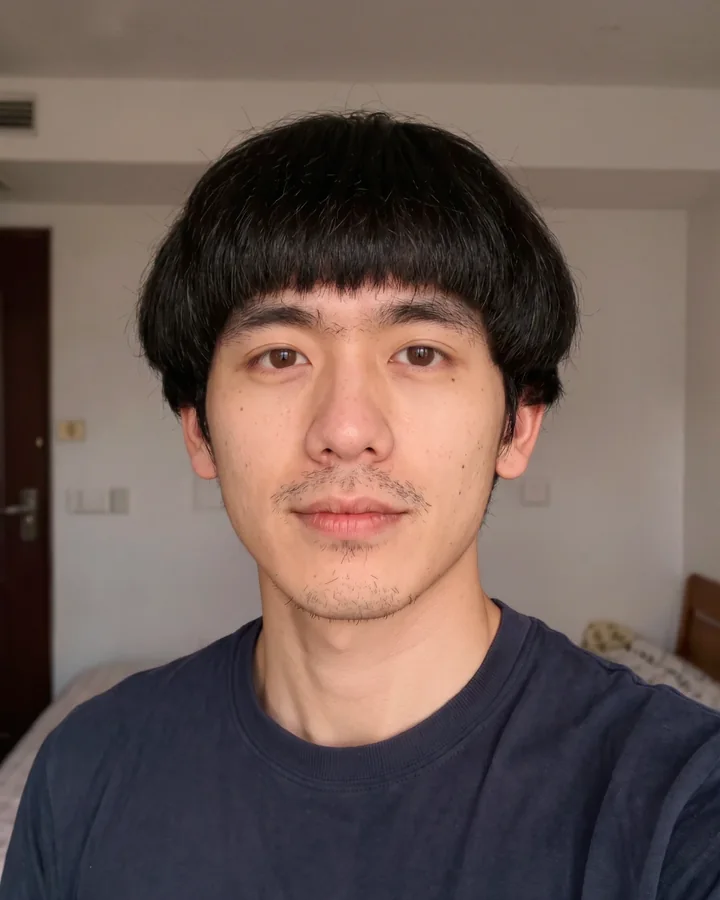
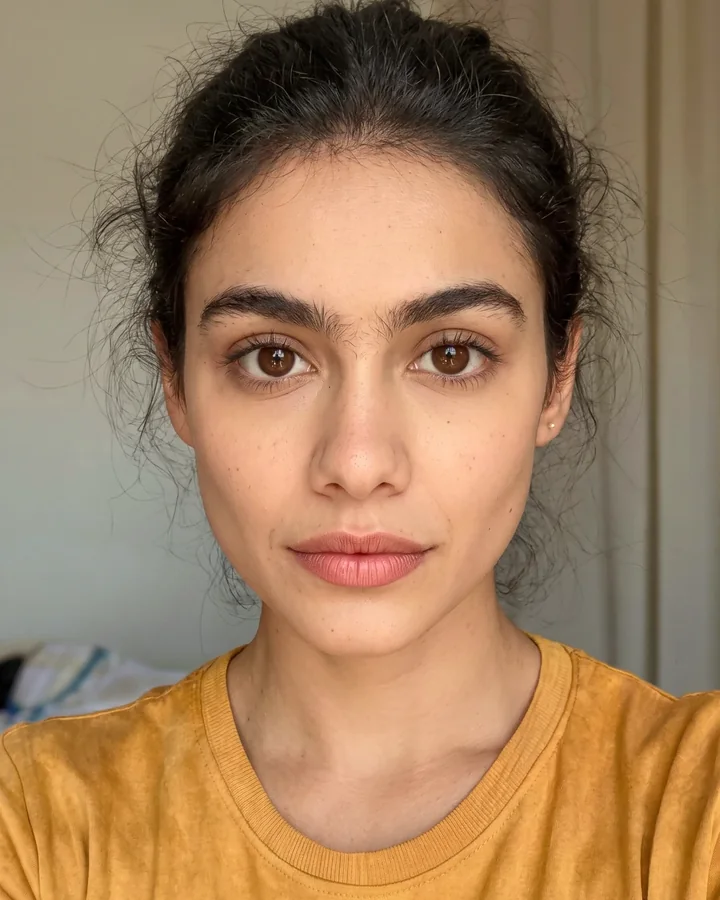
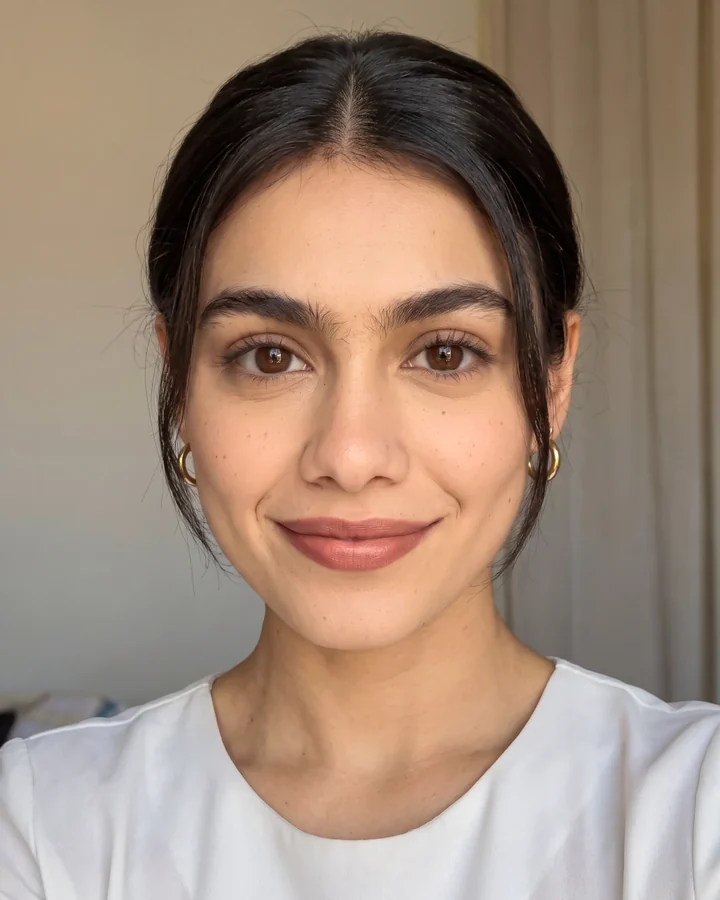
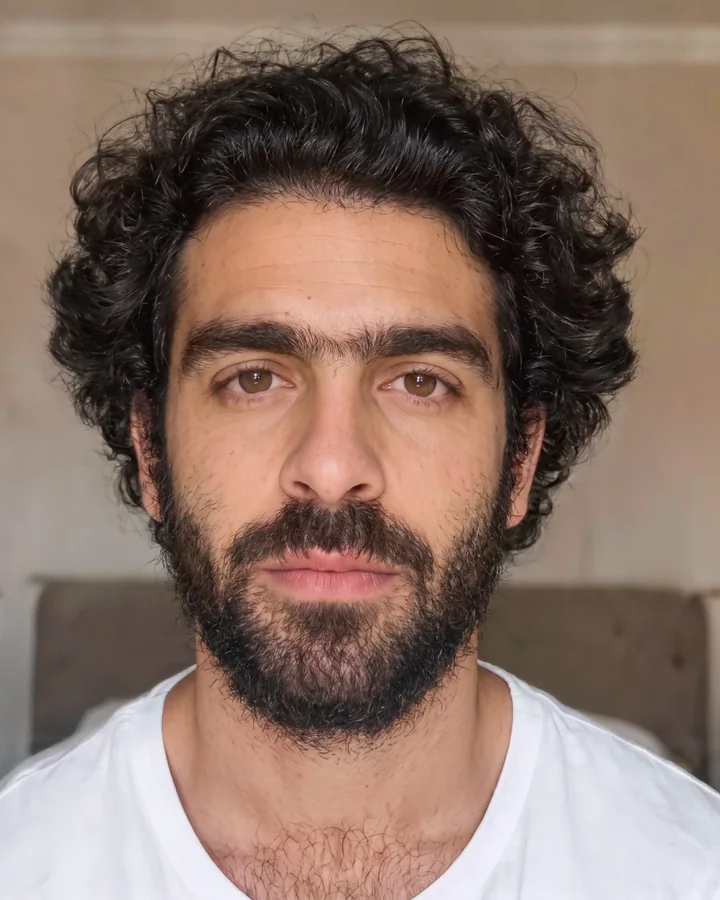
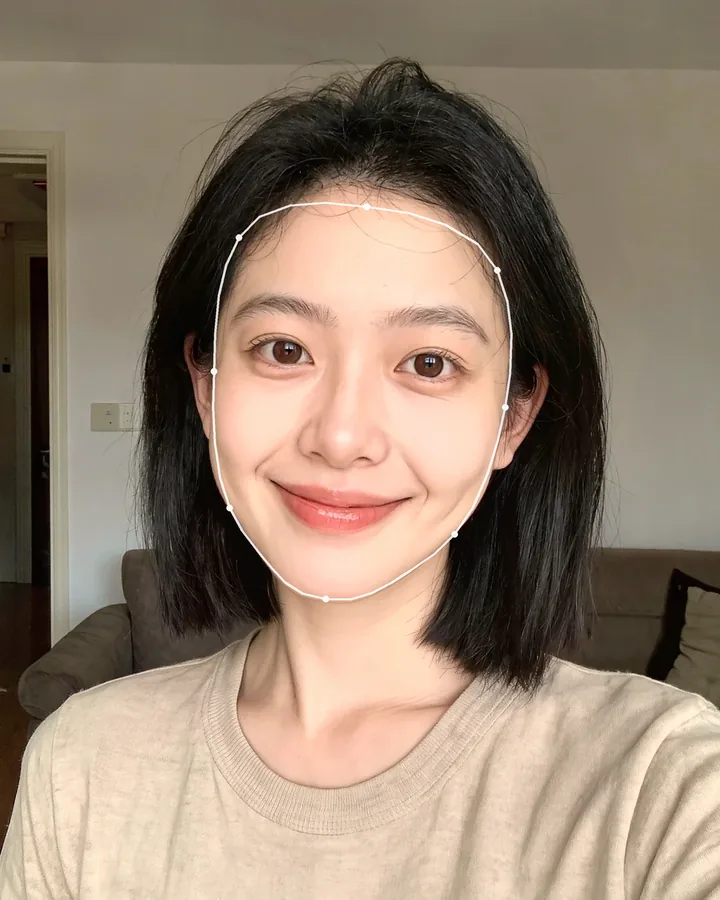
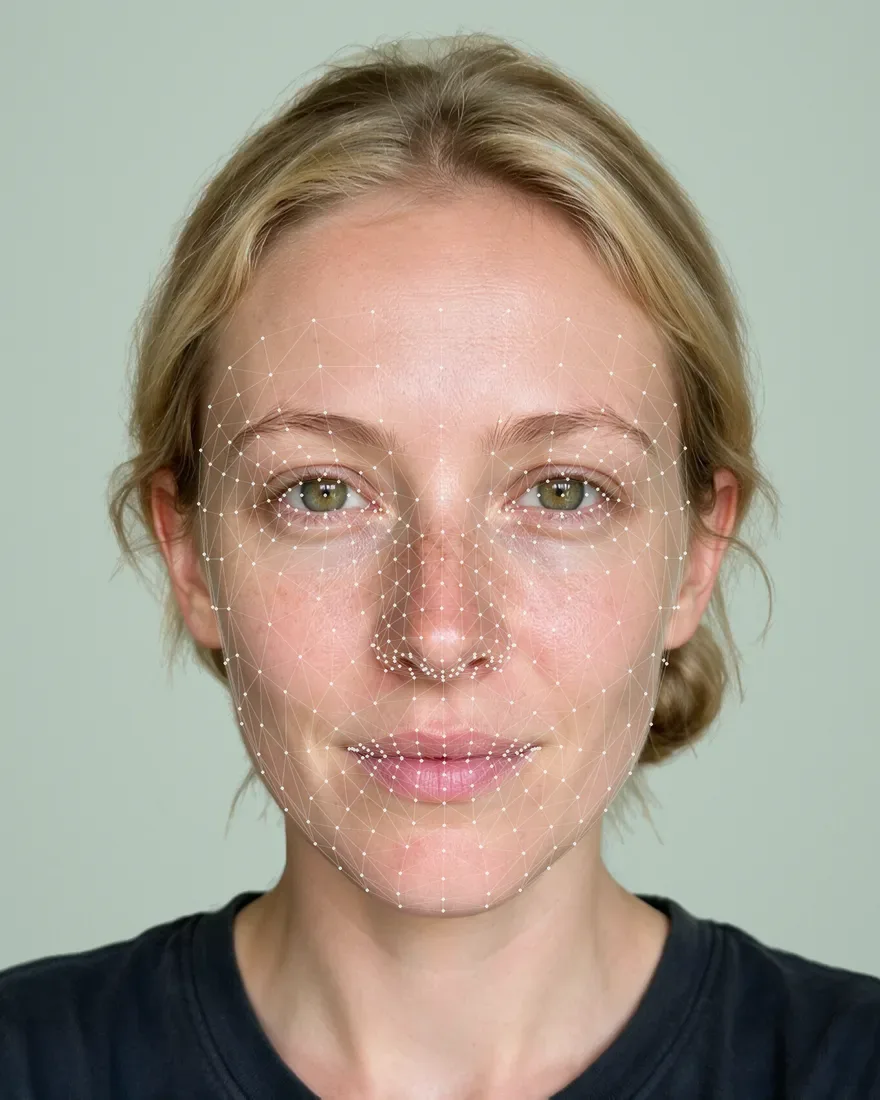
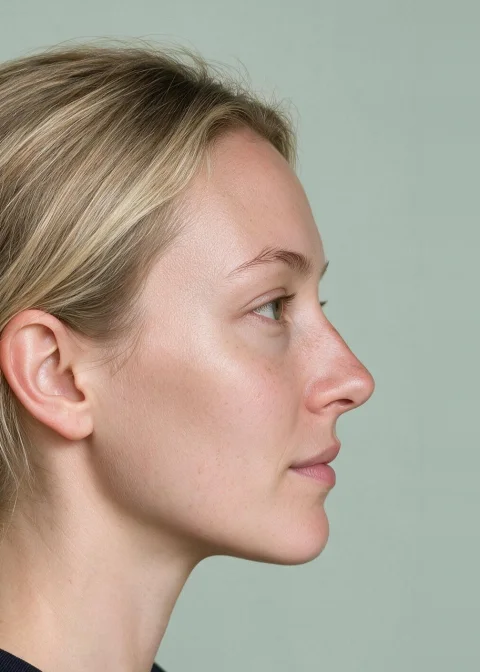
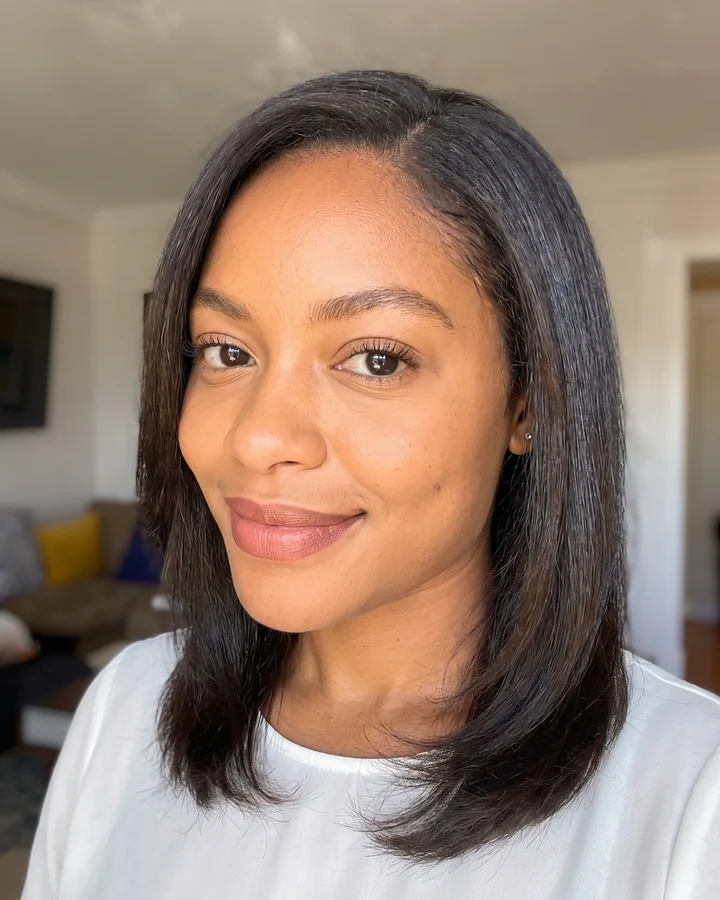
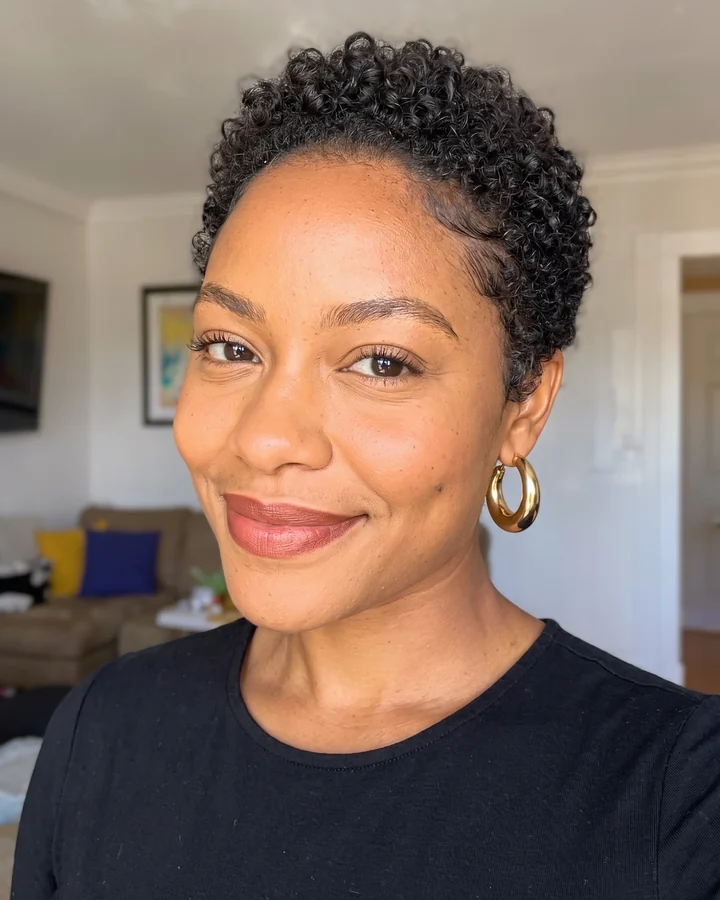
The steps describe what changes on a typical face as body fat drops, in words rather than millimetres, because how much shows differs from face to face. Below: water versus fat, each step side by side, the body-fat estimate, selfies, styling and our sources.
How to debloat your face overnight vs. over weeks: water puffiness vs. body fat
Overnight puffiness is water; a softer jaw that stays all day is fat. You can't burn fat off your cheeks overnight, and drinking more water won't replace eating a little less. Water comes and goes within a day; facial fat changes over weeks:
Overnight water puffiness
If your face looks noticeably rounder when you wake up than in the afternoon, the extra volume is usually fluid in your eyelids and lower cheeks, not fat.
Morning puffiness usually settles later in the day; facial fat changes over weeks.
Losing fat from the lower face
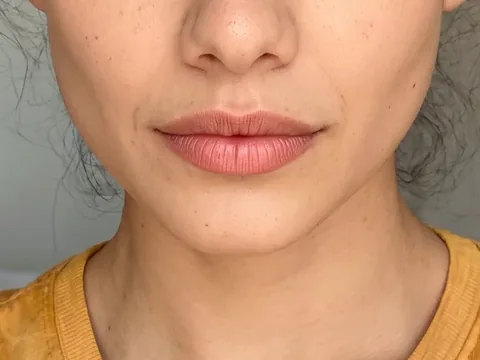
If your jawline and lower cheeks look equally soft morning and night, the layer covering your bone structure is fat (the cheek and jaw fat pads):
- The lower cheeks change more than the cheekbonesThe soft lower cheek slims, while the width across your cheekbones is mostly bone and barely moves. That gap is what makes cheekbones show more as you lean down.
- The jaw corners get cleanerAs fat clears over the lower border of the jaw, the jaw corners and the shadow below them show more.
- The line under the chin gets sharperLosing fat under the chin tightens the corner between neck and chin and shows more of the jawline.
Each step, side by side
The steps describe the direction of change on a typical face as body fat drops. How much shows differs from face to face, because people store and lose fat in different places, so the page gives no millimetre figures. The calculator assumes that each point lost below 15% body fat for men or 23% for women shows more on the face, and counts each of those points as one and a half; points above those levels count as one. That is a choice made for this illustration, not a measured figure. The example body-fat figures only show what each step means. On your own photo, the lines follow 23 points along the edge of your face that the page finds in your browser (MediaPipe Face Landmarker); how far they move is the same illustration of a typical face, not a measurement of yours.
Not sure of your body fat? The "Not sure?" link under the sliders estimates it from your height, weight and age; how that works is below.
| Step |
Body fat (example) |
Lower cheeks |
Jaw corners |
Under the chin |
| Where you start |
Men 22% · Women 30% (where the sliders start) |
Your face today |
Your face today |
Your face today |
| 4 points less body fat |
Men 22% to 18% · Women 30% to 26% |
Slightly slimmer |
Slightly slimmer |
Slightly sharper |
| 7 points less body fat |
Men 22% to 15% · Women 30% to 23% |
Slimmer |
Slimmer |
Sharper |
| 10 points less body fat |
Men 22% to 12% · Women 30% to 20% |
Clearly slimmer |
Clearly slimmer |
Clearly sharper |
| 13 or more points less body fat |
Men 28% to 12% · Women 36% to 20% |
Much slimmer |
Much slimmer |
Much sharper |
How the body-fat estimate works
The "Not sure?" link under the sliders uses the formula from Deurenberg et al. (1991), which estimates body fat from body mass index (BMI), age and sex: body fat % = 1.2 × BMI + 0.23 × age − 10.8 × sex − 5.4, with sex = 1 for men and 0 for women. BMI is your weight in kilograms divided by your height in metres, squared. The answer is rounded to a whole number and set as your body fat now.
It is an estimate. BMI can't tell muscle from fat, so a muscular person reads higher than they are, and two people with the same height, weight and age can differ by several points. A scan at a gym or clinic gives a closer number. Here is the formula worked through for six people:
| Example |
Height and weight |
BMI |
Estimated body fat |
Slider set to |
| A man of 30 |
175 cm, 70 kg |
22.9 |
18.1% |
18% |
| A man of 30 |
180 cm, 85 kg |
26.2 |
22.2% |
22% |
| A man of 45 |
178 cm, 92 kg |
29.0 |
29.0% |
29% |
| A woman of 30 |
165 cm, 58 kg |
21.3 |
27.1% |
27% |
| A woman of 30 |
168 cm, 70 kg |
24.8 |
31.3% |
31% |
| A woman of 45 |
162 cm, 75 kg |
28.6 |
39.2% |
39% |
Why close-up phone selfies hide your cheekbones and make your face look bloated
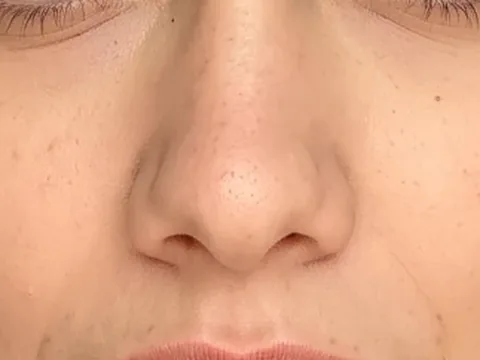
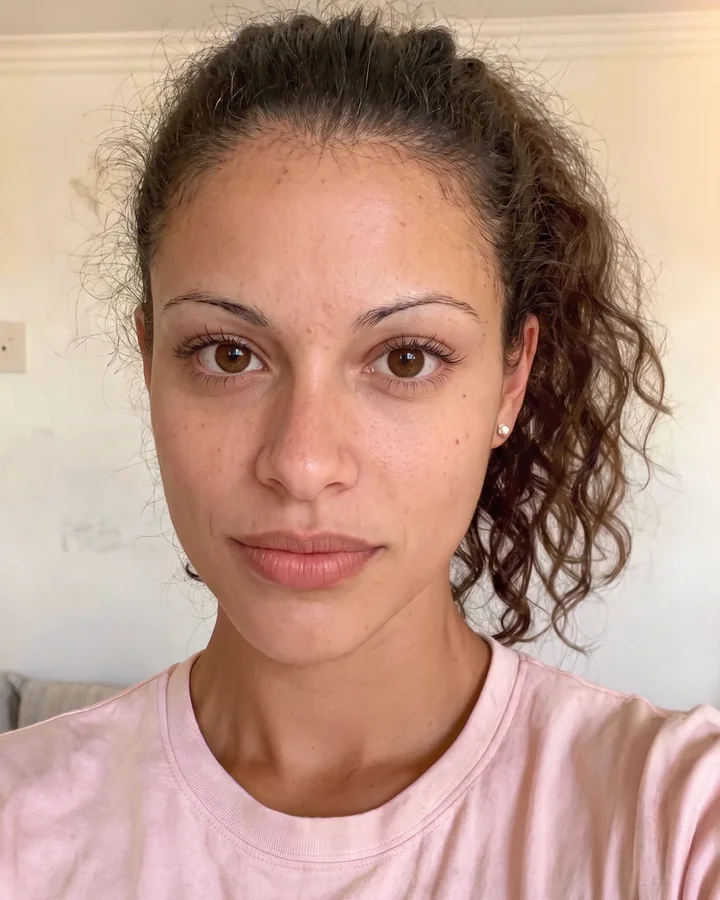
A front-camera selfie taken seconds after a mirror check can show puffier cheeks and a narrower jaw. The cause is the close wide-angle lens, not water. Ward et al. (2018) showed that a photo taken from 30 cm (12 in) makes the nose look clearly wider than one taken from 1.5 m (5 ft).
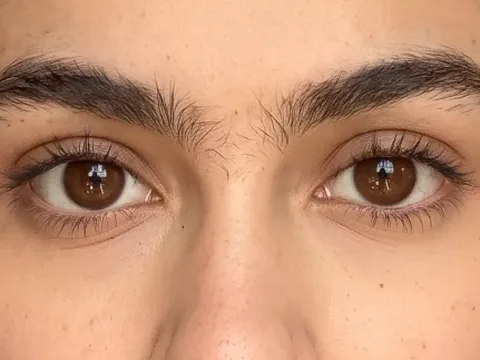
The same closeness makes the jaw corners, which sit further back from the lens, look narrower, and it can hide the hollows under the cheekbones you see in a mirror. Compare photos taken the same way: same distance, same light. CEVO's scan reads your iris size to tell how close the camera was, and asks for a retake if the photo was taken too close.
How to frame your cheekbones & jawline right now (haircuts, beard & glasses)
Whatever your body fat or morning puffiness, two styling changes make your cheekbones and jawline look leaner without changing the face underneath:
Open up the cheekbone shelf
Bulky hair sitting right around your ears and lower temples makes a soft midface look wider and rounder. A mid-to-high temple taper with textured height at the crown for men, or cheekbone-skimming layers that angle inward toward the collarbone for women, draws the eye up to your cheekbones (see our FWHR haircut guide).
Where to put your beard neckline
Shaving your neckline too high along the jaw edge creates a "double chin" optical illusion. Carve your upper cheek line along the line from your ear tragus to your mouth corner, and set your lower neckline just below the jawbone, right where the head meets the neck.
Sources
-
Deurenberg P, Weststrate JA, Seidell JC (1991). Body mass index as a measure of body fatness: age- and sex-specific prediction formulas. British Journal of Nutrition, 65(2), 105–114.
DOI: 10.1079/BJN19910073
-
Ward B, Ward M, Fried O, Paskhover B (2018). Nasal Distortion in Short-Distance Photographs: The Selfie Effect. JAMA Facial Plastic Surgery, 20(4), 333–335.
DOI: 10.1001/jamafacial.2018.0009