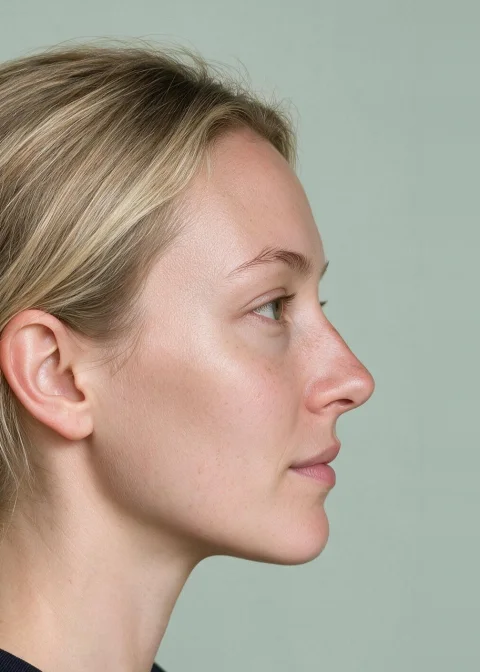
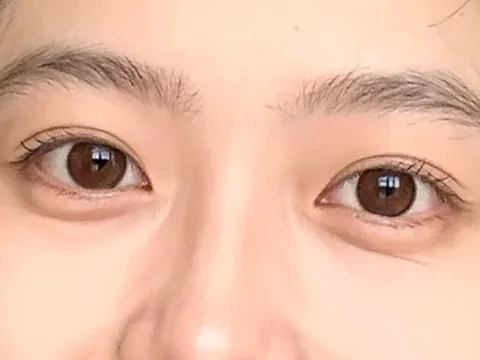
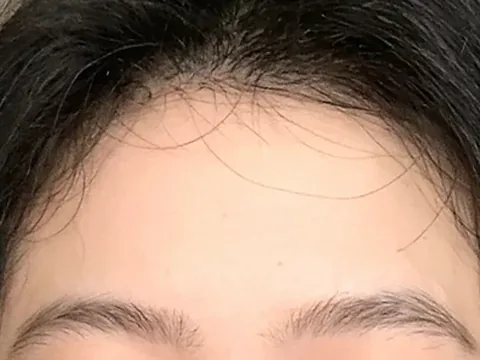
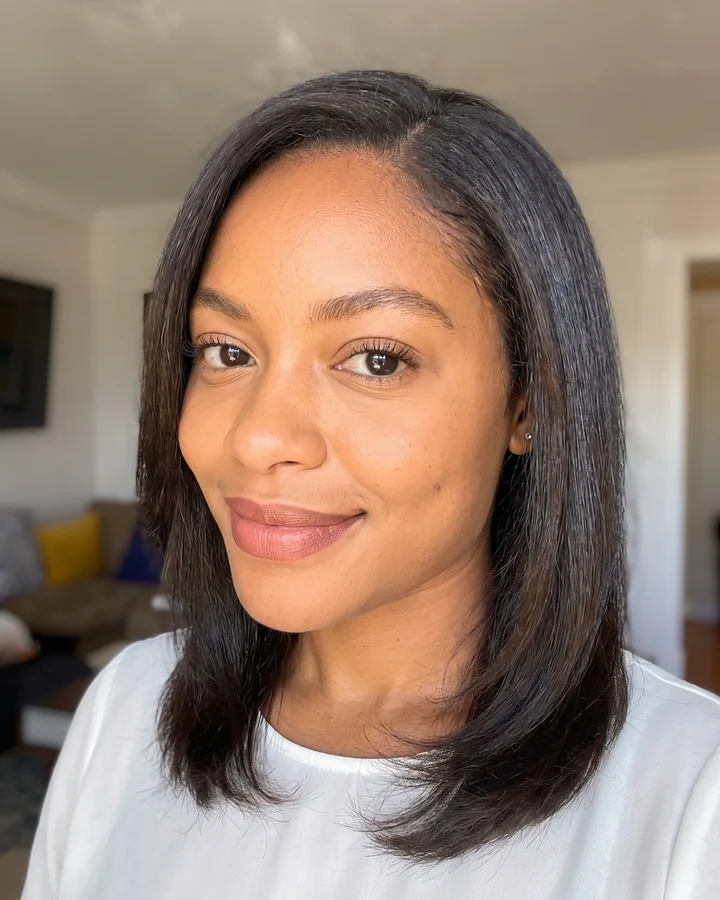
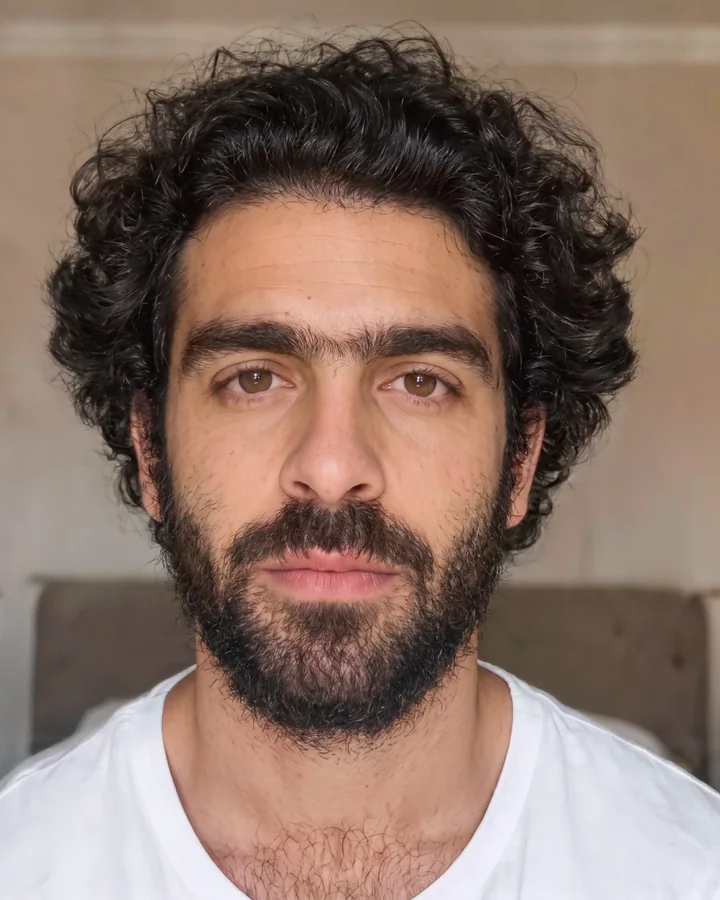
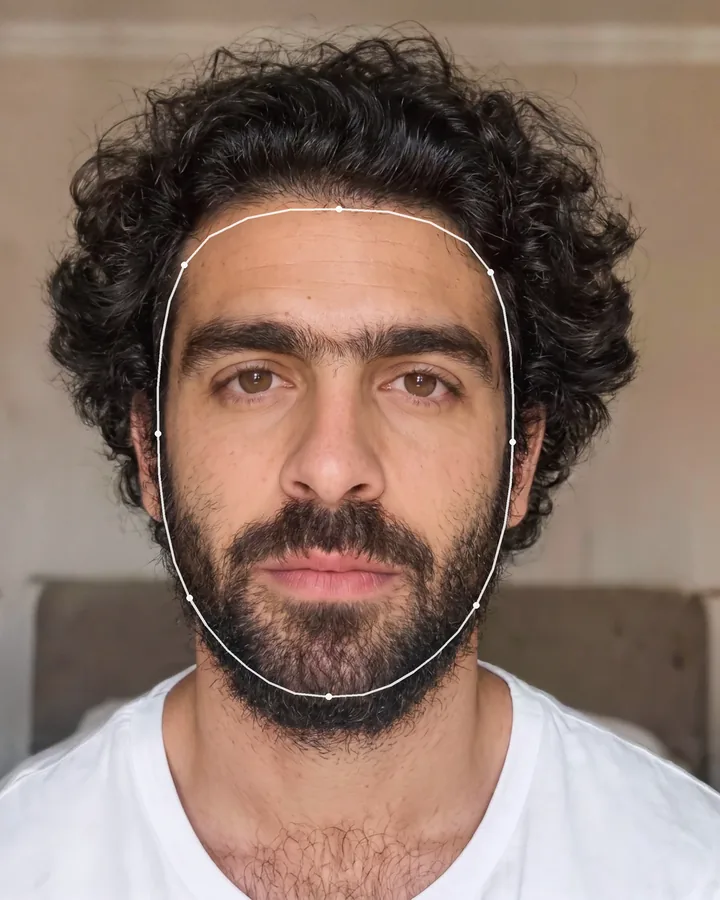
It's the line from corner to cornerUp means the outer corner sits higher than the inner one. Down means it sits lower.
Most eyes tilt slightly upA few degrees up is the most common result. Level eyes are common too.
What you can change
Brows and lashes change how your eyes read.
BeforeAfter
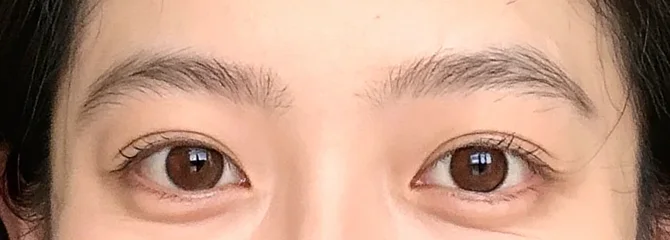
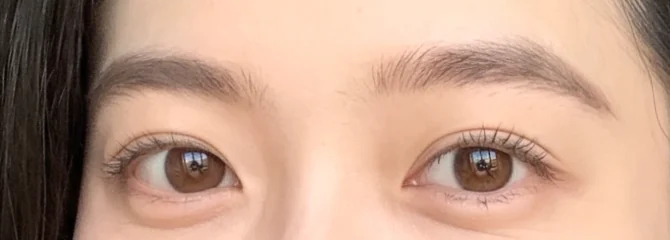
Fuller brows, a little mascara
A fuller brow with a defined tail, plus mascara on the lashes, frames the outer corners of the eyes. The corners stay where they are; only the frame around them changes.
The three eye tilts
Tap a tilt to see what suits it.
This face
Upward
The outer corners of these eyes sit higher than the inner corners. Most adults' eyes tilt up a few degrees.
Brows
A soft arch suits this tilt. A brow tail that follows the eye line keeps it.
Glasses
Most frames suit this tilt. Frames that rise a little at the outer edge follow the same line.
Tap Level or Downward to compare.
What CEVO gives you. From one selfie.
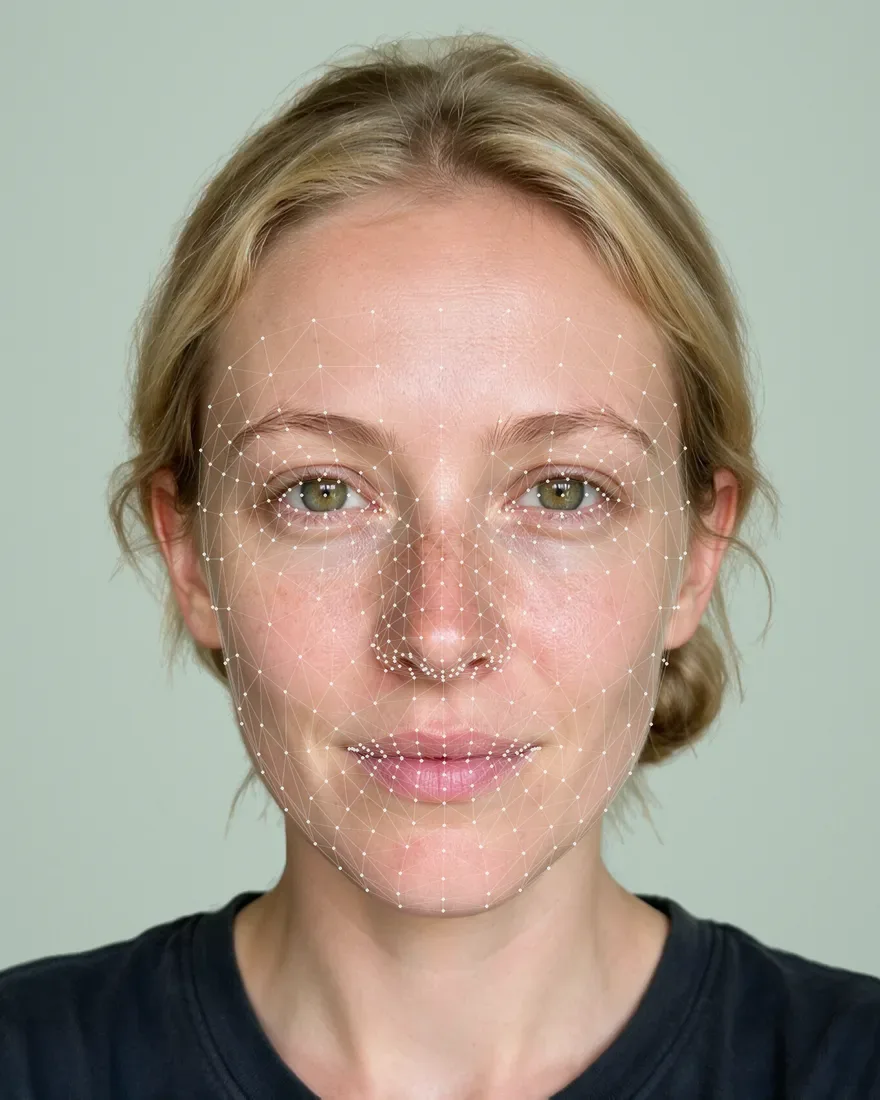
A 478-point face scan
Every point of your face mapped from one selfie, plus a side photo for your profile.
169 tests, region by region
Twelve regions of your face measured, from brows to jawline, plus the age your face reads as.
A natural glow-up on your own face
Hair, brows and skin changed on your photo. Your bone structure stays as it is.
Hairstyles on your own face
The cuts that suit your face shape, side by side.
Brows, beard and makeup
Brow shape, beard length and makeup picked for your features.
A 90-day routine
Hair, skin and grooming steps to follow for 90 days, made for your face.
$29
Basic Readout
Up to 10 front-view tests
Your facial balance breakdown, feature by feature
$59 Recommended
Complete Clinical Dossier
Front and side: all 169 tests
Glow-up and up to 3 hairstyles on your own face
90-day routine and your facial age
$119
Master Suite, the surgery pack
Surgical simulation with a millimetre change map
Surgeon-ready PDF and up to 10 hairstyles
4 re-scans over a year
One payment, no subscription. Every report is checked by our team and ready within 24 hours.
How the free scan works
1 Take a selfie
Prop your phone at eye level, about 1.5 m away. Too close, and CEVO asks for another photo.
2 See your face shape and what suits you
Free: your face shape, your strengths and your first tips, in plain words.
3 Decide if you want more
See how many more tips are waiting for you. Unlock them only if you want them.
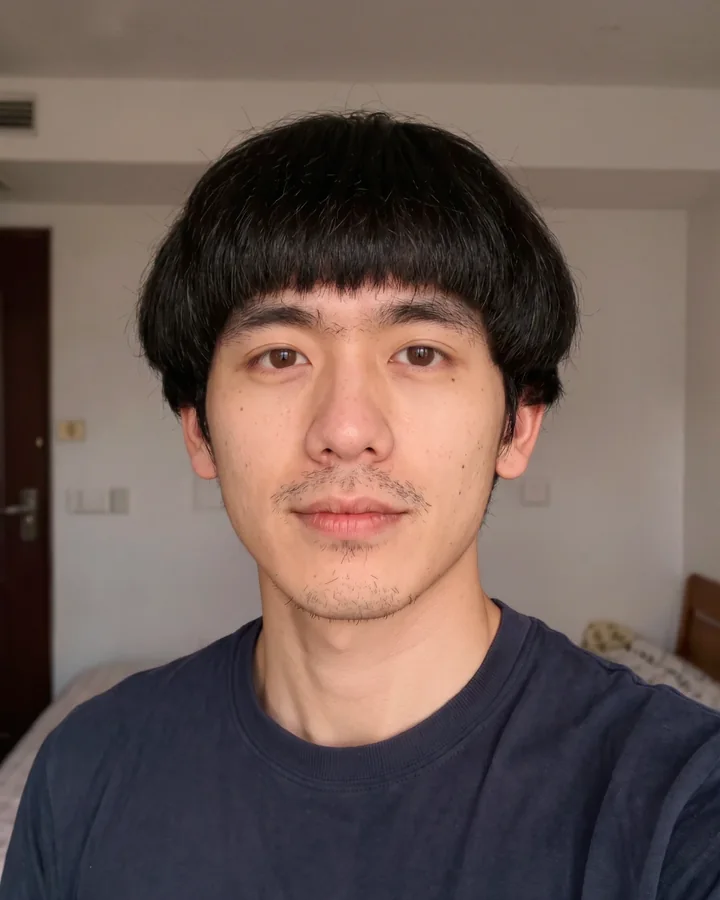
Take a straight-on photo with the phone at eye level and your head level. A line from the inner to the outer corner of each eye shows whether it rises or falls. The calculator above draws it for you.
What is a normal canthal tilt?
Most adults' eyes tilt slightly up. In published studies men average about +3° and women about +4°.
Why do my eyes look tilted down in selfies?
A tipped head or a phone held below your chin makes the outer corners look lower. Hold the phone at eye level and keep your head level. CEVO's scan checks how close the camera was and asks for a retake if it was too close.
Can I change how my eye tilt looks?
The corners don't move without surgery, but brows, liner, glasses and hair change how the tilt reads. A tidy brow tail and upswept frames make eyes look more lifted, if you want them to.
Is it normal for my two eyes to tilt differently?
Yes. Almost nobody has two identical eyes. The calculator gives one reading for both, unless the two eyes clearly differ; then it tells you so.
How the calculator measures your eye tilt
How the calculator measures your eye tiltWhere the dots go, how the photo is levelled, why selfies shift the angle, and the studies behind them.
We level the photo with the line through both inner eye corners, then measure the angle from each inner corner to the outer corner. Below: where your tilt sits next to other people's, why selfies shift it, how styling changes the look, and our sources.
Where your eye tilt sits next to other adults
Men avg +3.1° ± 1.9° · Women avg +4.2° ± 2.0° · the curve pools both: +3.7° ± 2.0°
+4°
Typical range: mean ± 1 SD (16th–84th percentile)
What canthal tilt is
What is canthal tilt? Picture a level line drawn across your face (clinics often use the line through both pupils, #468–#473). Now draw a line from the inner corner of your eye by your tear duct (medial canthus, landmarks #133/#362) out to the outer corner where your eyelids meet (lateral canthus, #33/#263). The upward or downward angle of that line is your canthal tilt.
Upward, level or downward: When your outer eye corner sits higher than your tear duct (+2° and up), the tilt is upward (positive). When the inner and outer corners sit nearly level (0° to +1°), it is level (neutral). When the outer corner sits lower than the inner corner (below 0°), it is downward (negative). In published studies, men average +3.1° ± 1.9° (typical range +1.2° to +5.0°) and women average +4.2° ± 2.0° (typical range +2.2° to +6.2°).
Why phone selfies make normal eyes look “negative” (and how to check it)
Measuring a raw 2D phone selfie without leveling your head first often gives a wrong number:
The 3° head-tilt trap: Nobody holds their head 100% level when taking a selfie. If your head tilts just 3.0° to one side, a basic screen ruler will tell you one eye is 3.0° lower and the other is 3.0° higher, turning a normal +2.5° positive eye into what looks like −0.5° "negative canthal tilt." This tool levels the measurement first with the line through both inner eye corners (#133–#362), which tips with your head, so a crooked photo does not skew your reading.
Camera height and 24mm lens distortion: Holding a wide-angle smartphone camera (24 mm lens) at arm's length (30 cm / 12 inches) makes the middle of the face look bigger than the sides (Ward et al. 2018 measured this on the nose). Camera height matters too: a phone held below chin level can make the outer eye corners look lower than they are, and tucking the chin down changes the measured angle as well. CEVO's scan reads your iris size to tell how close the camera was, and asks for a retake if the photo was taken too close. The iris (#469–#471 right, #474–#476 left) is about the same width in most adults, which is why it works as a ruler.
Inner tear duct corner (#133 right · #362 left)This is the inner corner of your eye right next to your nose bridge (called the medial canthus or endocanthion in anatomy). Every eye-angle measurement starts from this inner anchor point.
Outer eye corner (#33 right · #263 left)This is the outer corner where your upper and lower eyelids meet toward your temple (called the lateral canthus). When this outer point sits higher than the inner corner, your tilt is positive (+°); when lower, negative (−°).
Levelling the photoThis calculator treats the line through both inner corners (#133–#362) as level, so a tilted head does not change the reading. CEVO's scan also reads your iris width (#469–#471 right, #474–#476 left) to tell how close the camera was.
Tilt = angle of the inner→outer corner line above the line through both inner corners
What is a normal canthal tilt for men and women?
Real-world measurements are lower than many posts suggest: in published medical studies (Farkas et al. 2005 and Rhee et al. 2012), men average +3.1° ± 1.9° (typical range: +1.2° to +5.0°) and women average +4.2° ± 2.0° (typical range: +2.2° to +6.2°).
Studies report small differences between family backgrounds, but the overall picture is the same: most adults' eyes tilt slightly up, by about +3° for men and +4° for women on average. The calculator names your reading like this:
Reading on the calculator
What it is called
Next to most adults
+7° and up
Upward tilt
More lifted than most
+2° to +6°
Upward tilt (slight from +2° to +4°)
The usual range for adults
0° to +1°
Level
Common
−1° to −2°
Slight downward tilt
Less common than an upward tilt, but plenty of people have it
−3° and below
Downward tilt
Less common than an upward tilt, but plenty of people have it
How styling changes the way your eye tilt looks
You cannot move the bone or tendon at the outer corner of your eye with face exercises or eye creams. However, people never judge your eyes in isolation: the brain reads your eye angle by comparing it to the lines right next to your eyes: your eyebrow tail, your glasses frame, your upper lash line, and the hair at your temples. Adjusting these four everyday styling lines can add lift if you want it:
Tidy the outer brow tail
The outer tail of your eyebrow sets a line right above the outer corner of your eye. Tidying a few stray hairs from the bottom edge of the tail opens a little space above the outer corner, which adds lift without making your brows look thin.
Keep lash and liner weight on the outer third only
Putting dark eyeliner or heavy mascara across the middle of your upper eyelid makes your eye look rounder and shorter from side to side. Instead, keep the inner two-thirds light and focus dark contrast or lash density only on the outer third of the upper lash line (#160→#33).
Pick frames with high-set hinges
A frame adds its own line beside your eyes. A top rim that sweeps slightly upward, with the side hinges set high on the frame corner (like a browline frame or a subtle upswept rectangle), adds lift. Teardrop aviators, whose arms attach near the middle of the lens, slope down instead.
Open up your temples (tapered sides or swept layers)
Hair hanging low beside the outer corners of your eyes covers your temples. Opening up the temple area, with a clean mid-to-high temple taper for men, or cheekbone-skimming layers swept upward toward the crown for women, pulls the viewer's eye diagonally upward along your cheekbones.
Sources
Farkas LG, Katic MJ, Forrest CR, et al. (2005).International anthropometric study of facial morphology in various ethnic groups/races. Journal of Craniofacial Surgery, 16(4), 615–646.
Rhee SC, Woo KS, Kwon B (2012).Biometric study of eyelid shape and dimensions of different races with references to beauty. Aesthetic Plastic Surgery, 36(5), 1236–1245.
Price KM, Gupta PK, Woodward JA, Stinnett SS, Murchison AP (2009).Eyebrow and eyelid dimensions: an anthropometric analysis of African Americans and Caucasians. Plastic and Reconstructive Surgery, 124(2), 615–623.
Ward B, Ward M, Fried O, Paskhover B (2018).Nasal Distortion in Short-Distance Photographs: The Selfie Effect. JAMA Facial Plastic Surgery, 20(4), 333–335.
Vasanthakumar P, Kumar P, Rao M (2013).Anthropometric analysis of palpebral fissure dimensions and its position in South Indian ethnic adults. Oman Medical Journal, 28(1), 26–32.