Facial thirds calculator. See how your face splits, top to bottom.
A free facial harmony test: pick a face or add your photo and mark your hairline, brows, nose and chin. See which third is longer or shorter, and the haircuts and glasses that suit it.
Free, and your photo never leaves this device.
Drag a dot to move it.
This face
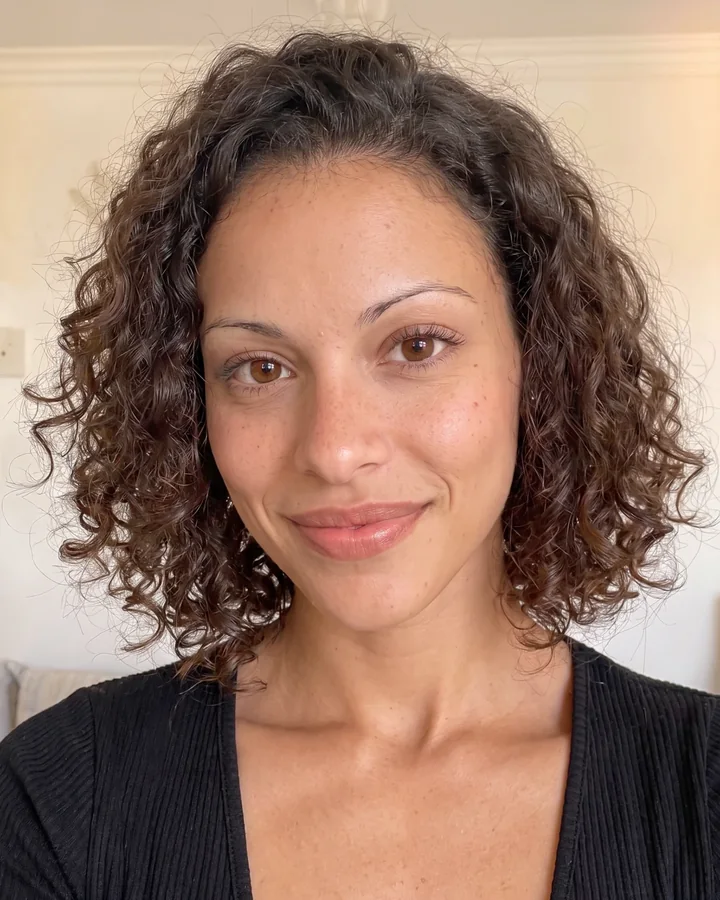
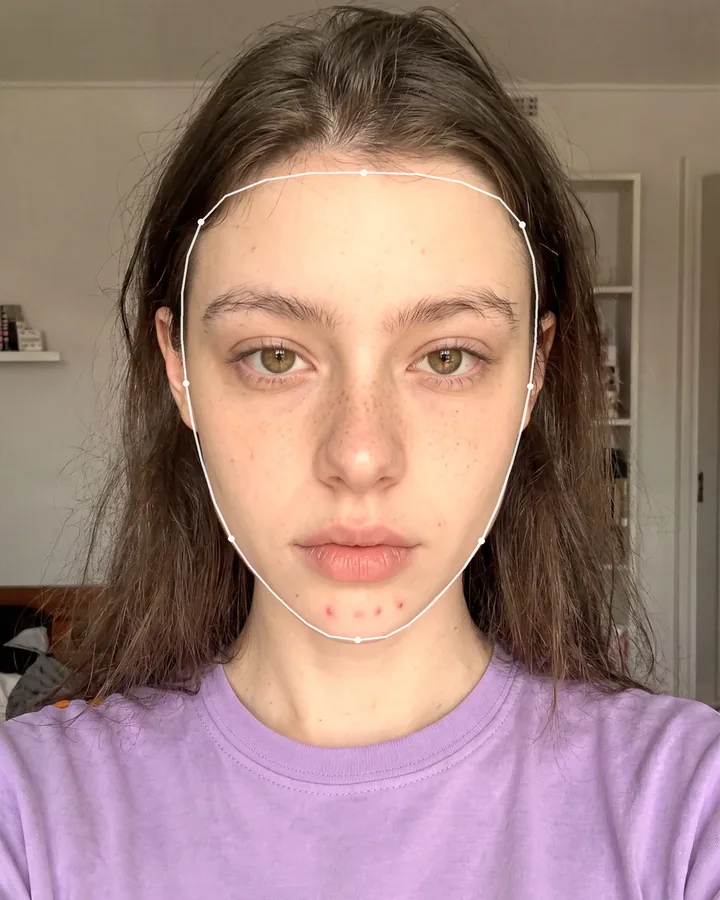
Longer middle
The middle, from the brows to the base of the nose, is the longest of the three parts.
- ForeheadAbout a third 30%
- Middle (brows to nose)Longer than a third 39%
- Lower face (nose to chin)About a third 31%
What suits this face
- Haircuts
- Glasses
- Also try
Get tips from your whole face, not one split
These ideas go by your thirds alone. The free scan reads your face shape from one selfie and gives your strengths and first tips, plus how many more it found.
Start free scanDrag a dot, or select it and use the arrow keys.
See what suits your face, free
Start free scanWhat your result means
- Three slices, top to bottomHairline to brows, brows to nose, nose to chin, each as a share of the face.
- Even thirds are a rule of thumbReal faces rarely split exactly evenly. The page shows how far each third is from even.
- Photo and hairline matterProp the phone at eye level, about 1.5 m (5 ft) away. Your hairline is where forehead skin meets hair in the middle; push a fringe back first.
What you can change
Hair can make one part of your face look longer or shorter.
-
Before 
After 
A textured top with lift, clean-shaven
His forehead is shorter than a third. A raised top shows more of it; a clean shave suits his longer lower face.
-
Before After 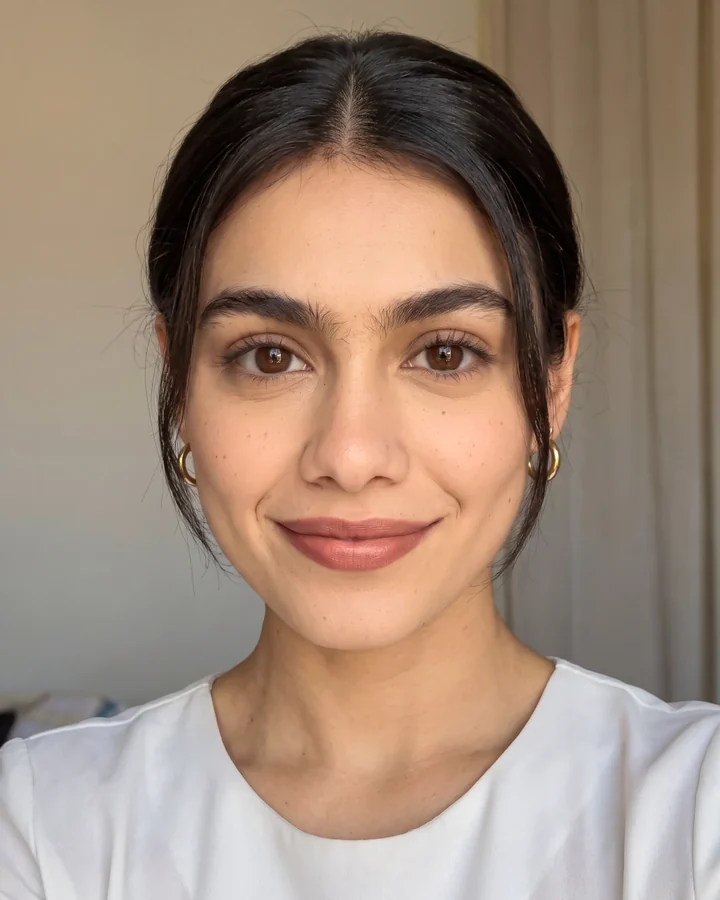
Face-framing pieces at the cheekbones, hair tied back
Her middle is longer than a third. Pieces beside her cheeks break up the brows-to-nose stretch.
Facial harmony test: seven ways a face can split
The tool's result is marked. Tap any to see what suits it.
This face
Close to even
The forehead, middle and lower face are close to the same length.
- Haircuts
- Soft curtain layers, centre or side part, forehead showing or a light fringe.
- Glasses
- Most frames fit; pick one about as wide as your cheekbones.
- Also try
How the free scan works
-
1 Take a selfie
Prop your phone at eye level, about 1.5 m away. Too close, and CEVO asks for another photo.
-
2 See your face shape and what suits you
Free: your face shape, your strengths and your first tips, in plain words.
-

3 Decide if you want more
See how many more tips are waiting for you. Unlock them only if you want them.
Start with one selfie
Your face shape and what suits you, free.
What CEVO gives you. From one selfie.
-
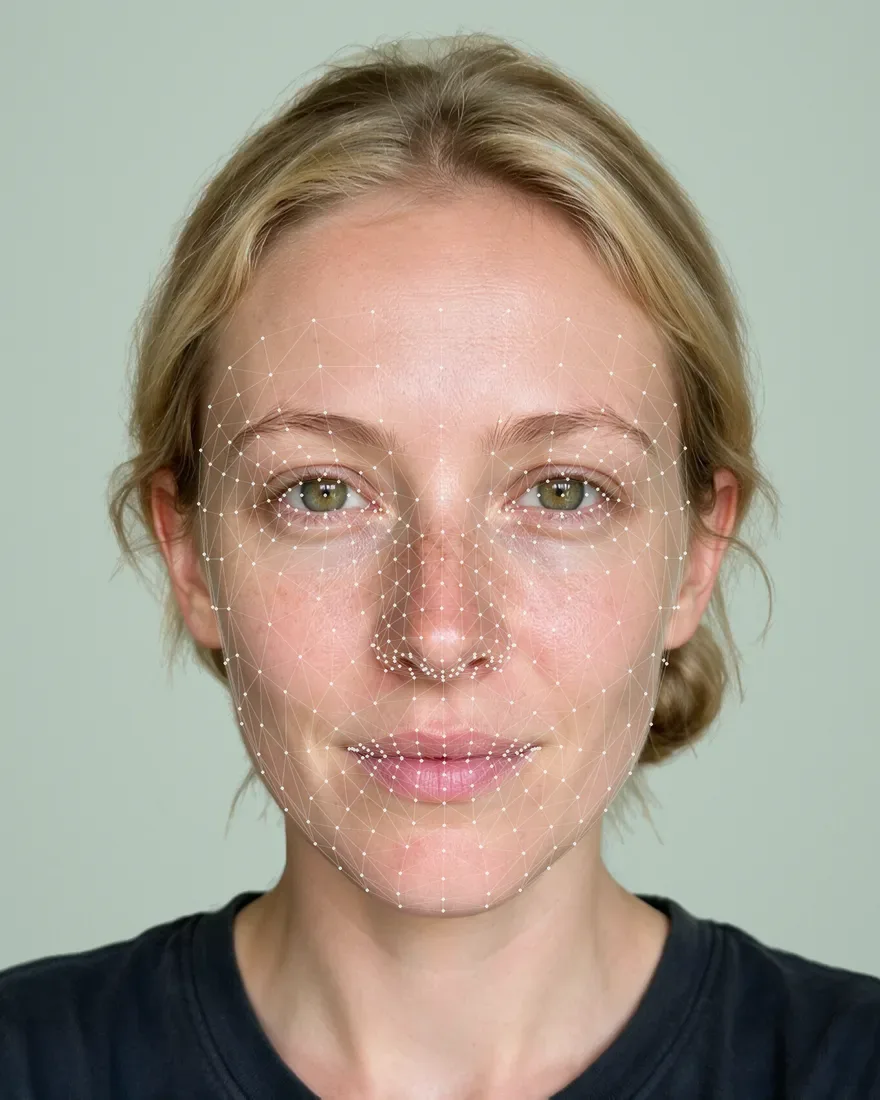
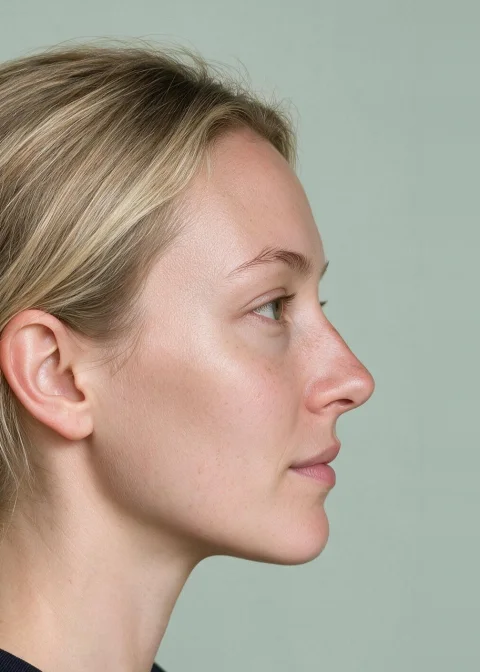
A 478-point face scan
Every point of your face mapped from one selfie, plus a side photo for your profile.
-
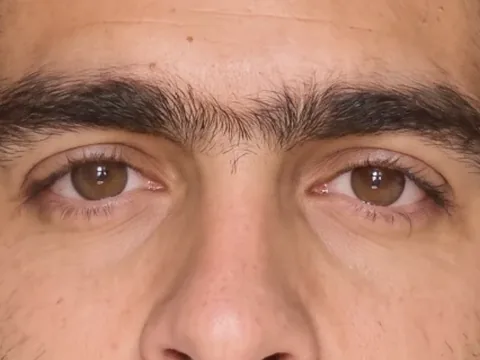
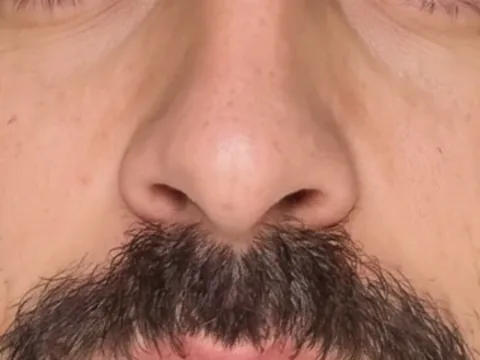
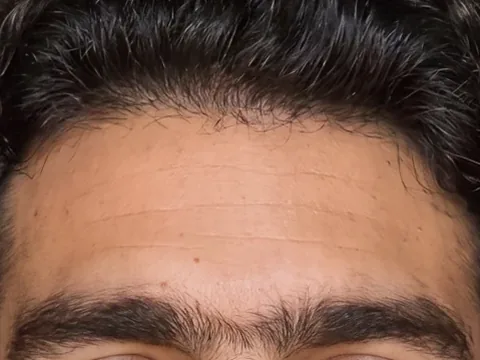
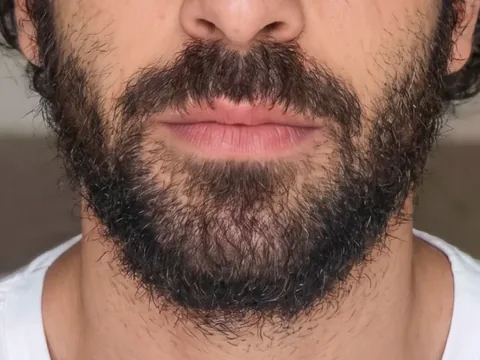
169 tests, region by region
Twelve regions of your face measured, from brows to jawline, plus the age your face reads as.
-
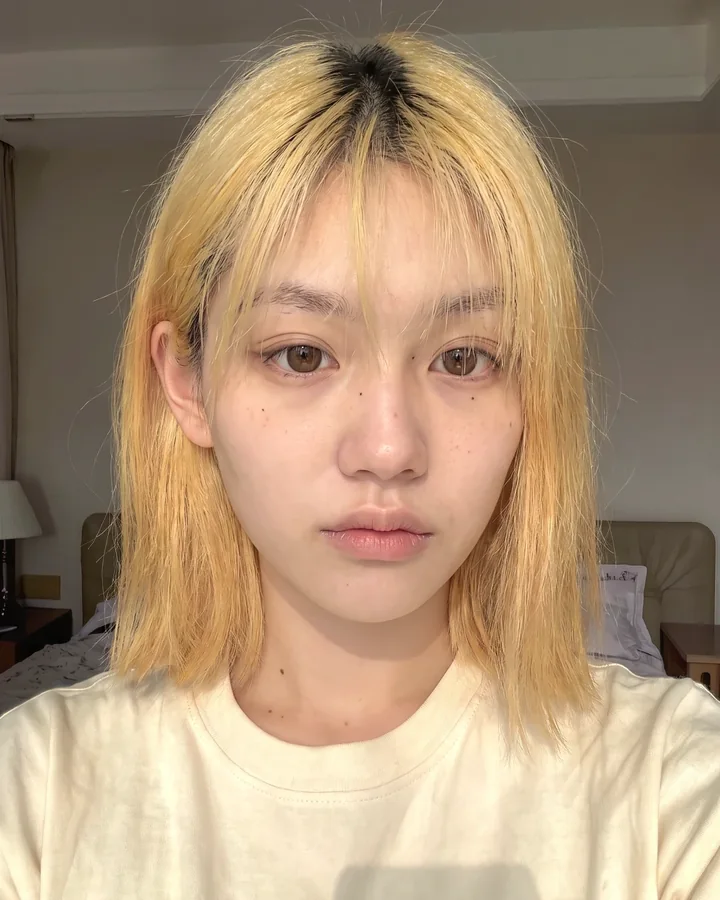
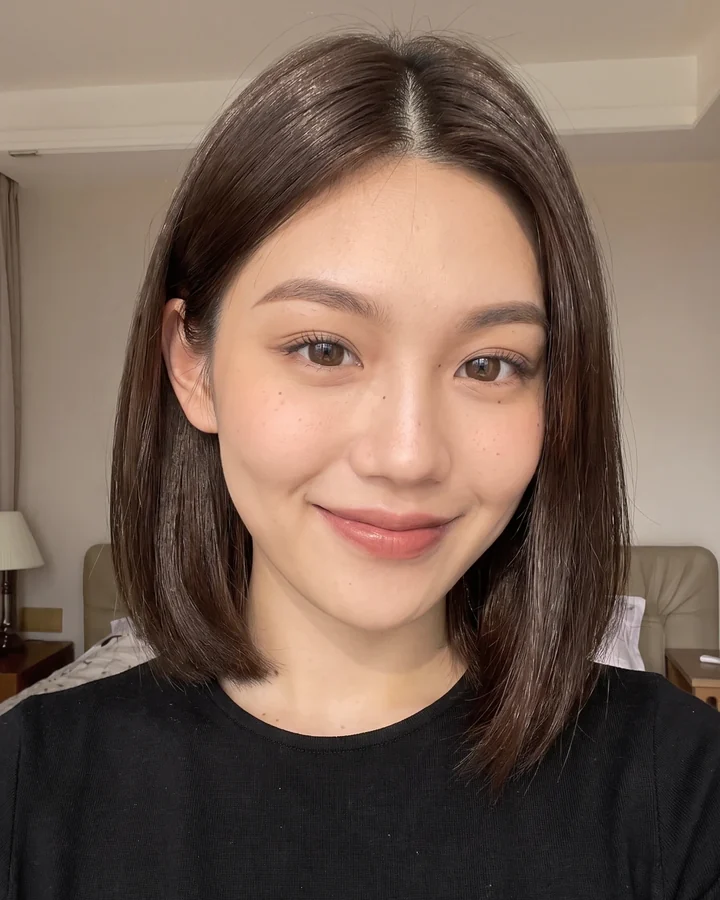
A natural glow-up on your own face
Hair, brows and skin changed on your photo. Your bone structure stays as it is.
-
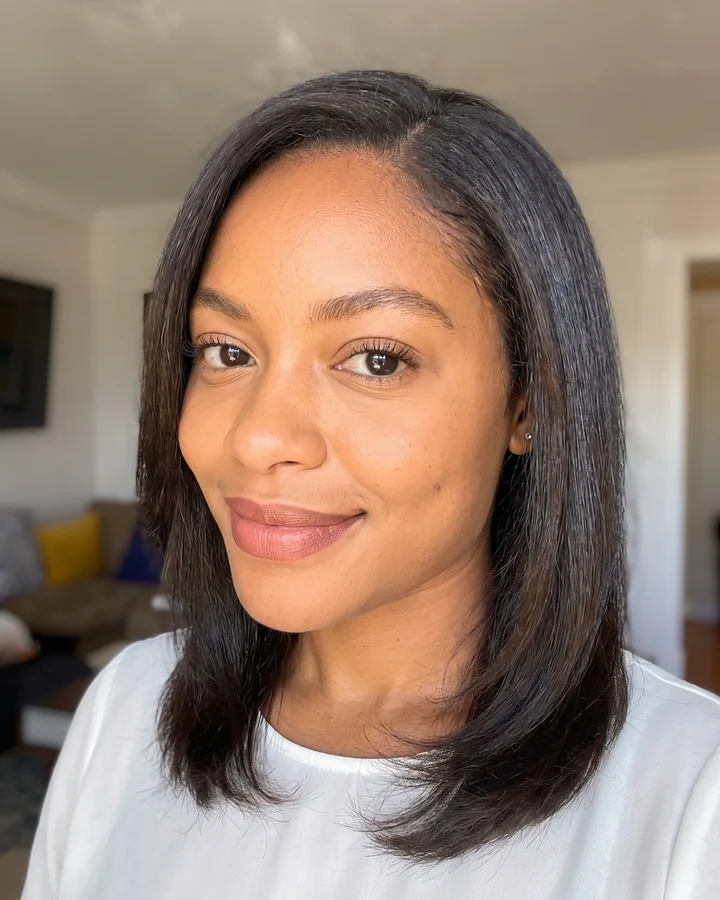
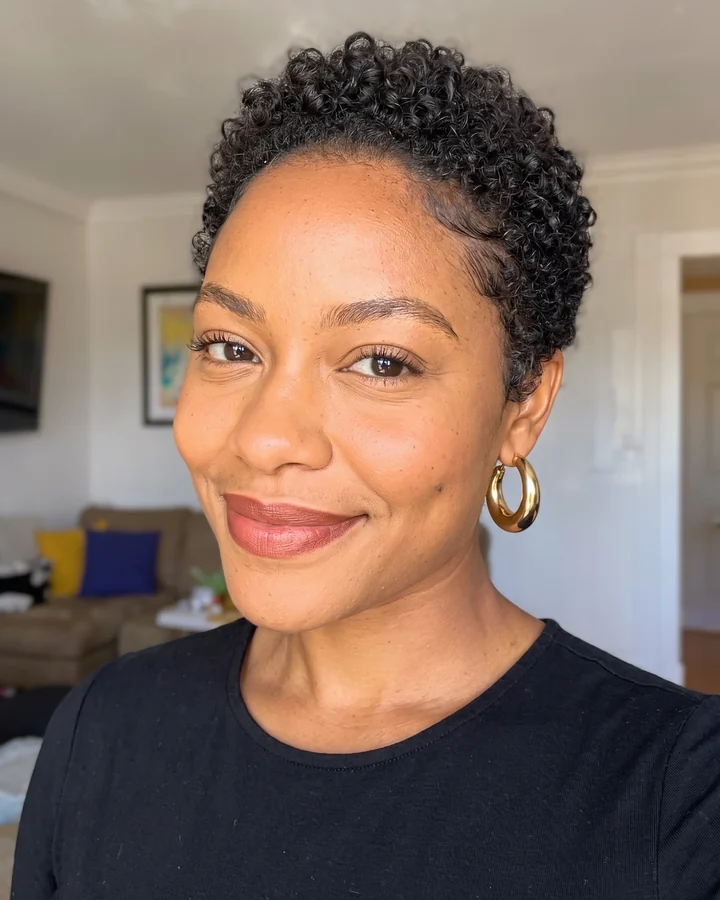
Hairstyles on your own face
The cuts that suit your face shape, side by side.
-


Brows, beard and makeup
Brow shape, beard length and makeup picked for your features.
-

A 90-day routine
Hair, skin and grooming steps to follow for 90 days, made for your face.
-
$29
Basic Readout
- Up to 10 front-view tests
- Your facial balance breakdown, feature by feature
-
$59 Recommended
Complete Clinical Dossier
- Front and side: all 169 tests
- Glow-up and up to 3 hairstyles on your own face
- 90-day routine and your facial age
-
$119
Master Suite, the surgery pack
- Surgical simulation with a millimetre change map
- Surgeon-ready PDF and up to 10 hairstyles
- 4 re-scans over a year
One payment, no subscription. Every report is checked by our team and ready within 24 hours.
Questions
What is a facial harmony test?
A facial harmony test checks how the parts of your face compare in size. This one is the facial thirds calculator: it compares your hairline-to-brows, brows-to-nose and nose-to-chin lengths. There is no score or rating, and uneven thirds are normal.
How do I measure my facial thirds?
Mark your hairline, the point between your brows, the base of your nose and the bottom of your chin. Measure the three gaps and divide each by the total. Even thirds come out at 33.3% each.
Are equal thirds normal?
They're rare. Equal thirds are an artists' rule; real faces seldom split exactly evenly. The page compares each third with an even third (33%).
Why do selfies throw off my thirds?
Camera tilt. A phone held high makes the forehead look bigger, held low the chin. Prop your phone at eye level, about 1.5 m (5 ft) away, or ask someone to take it.
How do I balance a short lower third?
Men: a short beard, a little fuller on the chin. Women: keep hair above the chin or swept back, off the jaw.
How the facial thirds calculator measures your face
How the facial thirds calculator measures your face The four points behind your split, how each third is read, and the studies behind them.
We measure three lengths down the middle of your face: hairline to brows, brows to the base of the nose, and nose to chin, each as a share of the whole. Below: where each point goes, how each third is read with the four example faces measured, why camera tilt shifts the split, and our sources.
How to find your three facial thirds
You only need four points down the centre line of your face: the hairline, the point between the brows, the base of the nose and the bottom of the chin. Clinical guides (Powell & Humphreys 1984; Arnett & Bergman 1993) also split the lower third in two: the upper lip takes about one third of it, and the lower lip and chin about two thirds. This calculator reads the three main thirds only.

- Upper forehead third (hairline to brow centre)Starts at the center of your natural hairline (trichion) and ends at the smooth ridge right between your eyebrows (glabella). Because hair can cover the hairline, this is the easiest third to change with a haircut.
- Middle nasal third (brow centre to nose base)Runs from between your eyebrows down to the base of your nasal septum where your nose meets your upper lip (subnasale). Framed visually by your eyebrow arch height and glasses bridge placement.
- Lower jaw & chin third (nose base to chin)Measured from the base of your nose down to the lowest bony point of your chin (menton).
Neoclassical canon: 33.3% : 33.3% : 33.3%
How your split is read, with the example faces measured
The classical rule says a face splits into three equal thirds. When Farkas et al. (1985) tested these classical rules on young adults, they found that they rarely hold exactly. Milutinovic et al. (2014) later compared attractive faces with the same proportions. So this calculator doesn't rank you against other people. It compares each of your thirds with an even third (a third is 33.3%).
30% to 36% reads as about a third; 29% or less is shorter and 37% or more is longer, and the third furthest from 33% names your result. None of the seven results is better than another; they decide which haircuts and beard ideas the page suggests. If one third comes out under 15% or over 55% of the face, a dot is on the wrong point, and the tool asks you to move it instead of giving a result. Here are the four example faces, measured with the dots this page starts on:
| Face | Forehead | Middle (brows to nose) | Lower face (nose to chin) | Result |
|---|---|---|---|---|
| Even thirds (the classical rule) | 33.3% | 33.3% | 33.3% | Close to even |
| Example face 1 (woman) | 30% | 39% | 31% | Longer middle |
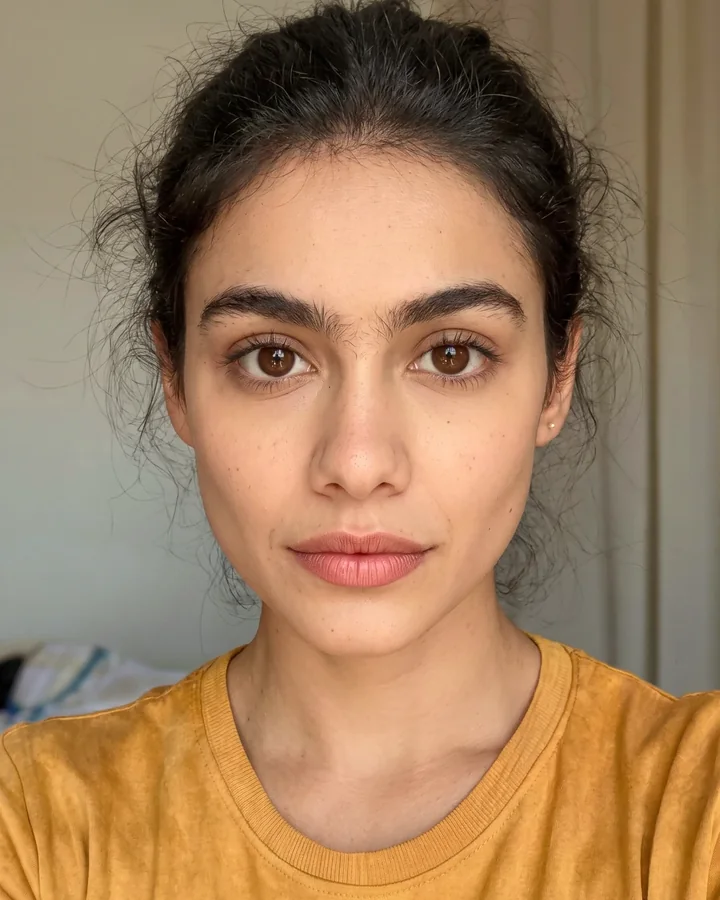
| Example face 2 (man) | 29% | 35% | 36% | Shorter forehead |
| Example face 3 (woman) | 31% | 35% | 34% | Close to even |
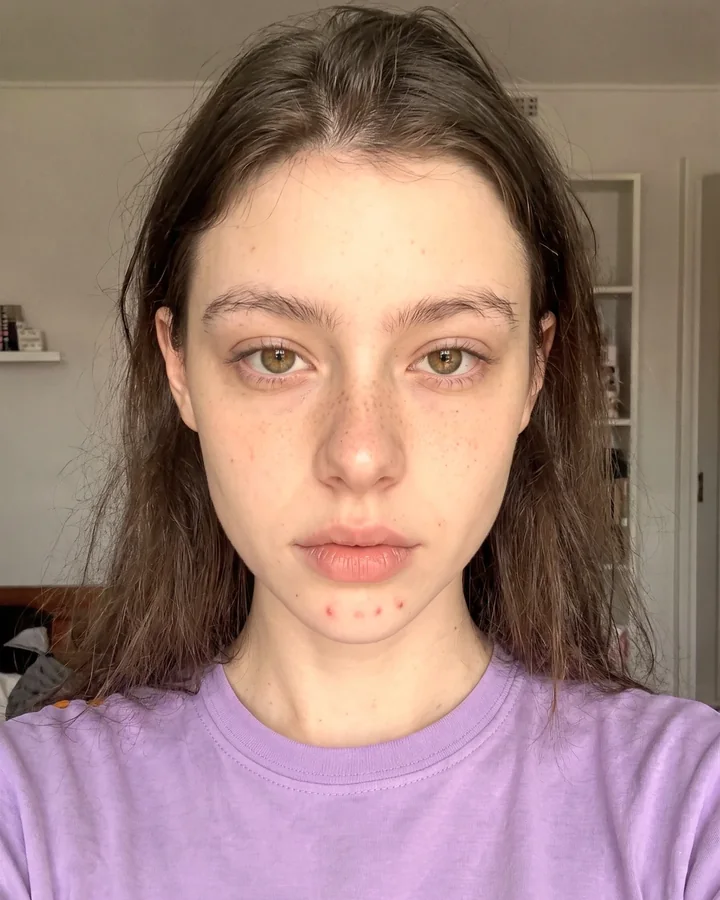
| Example face 4 (man) | 26% | 36% | 38% | Shorter forehead |
Why phone selfies make your forehead or chin look out of proportion
Facial thirds are very sensitive to up-and-down camera tilt on a close phone camera. Hold the phone above eye level and look up at the screen, and your forehead sits closest to the wide lens: it looks bigger and your lower face smaller. Hold it below chin level and the lower third grows instead.
Distance matters too: the closer the phone, the more the parts nearest the lens (forehead, nose, chin) are stretched, so a selfie from 30 cm stretches them more than a photo from 1.5 m (Ward et al. 2018; CEVO's selfie study). Before you trust any home measurement, prop the camera at eye level and at least 1.5 m (5 ft) away, or use CEVO's free scan. CEVO's scan reads your iris size (about 11.7 mm across in most adults) to tell how close the camera was, and asks for a retake if the photo was taken too close. Read more in our selfie distortion study.
| Where the camera is | What it does to your face | Good for thirds? |
|---|---|---|
| About 30 cm, a close selfie | Features nearest the lens look bigger; any tilt shifts the forehead and chin | No |
| About 50 cm to 75 cm, arm out | A little stretched | Only at eye level |
| About 1.5 m (150 cm), propped or taken by a friend | As other people see you | Yes |
| Above eye level | The forehead looks bigger, the lower face smaller | No |
| Below chin level | The lower face looks bigger | No |
Sources
-
Farkas LG, Hreczko TA, Kolar JC, Munro IR (1985). Vertical and horizontal proportions of the face in young adult North American Caucasians: revision of neoclassical canons. Plastic and Reconstructive Surgery, 75(3), 328–338.
-
Milutinovic J, Zelic K, Nedeljkovic N (2014). Evaluation of Facial Beauty Using Anthropometric Proportions. The Scientific World Journal, 2014, 428250.
-
Powell N, Humphreys B (1984). Proportions of the Aesthetic Face. Thieme Medical Publishers, New York.
-
Arnett GW, Bergman RT (1993). Facial keys to orthodontic diagnosis and treatment planning. Part II. American Journal of Orthodontics and Dentofacial Orthopedics, 103(5), 395–411.
-
Ward B, Ward M, Fried O, Paskhover B (2018). Nasal Distortion in Short-Distance Photographs: The Selfie Effect. JAMA Facial Plastic Surgery, 20(4), 333–335.
See what suits your face. Free, from one selfie.
A few minutes: your face shape, your strengths and your first tips.
Start free scan