
Hair at the back of the head
From the side, people see your whole head. Some length at the crown and back balances the side view; a flat, shaved back makes the nose and chin stand out more.
Pick a side photo and drag the chin dot, or add your own and the dots find your profile. See where your chin sits next to your forehead and nose.
Free, and your photo never leaves this device.
1 of 3
Tap the front edge of your forehead, just above your eyebrows.

Drag the chin dot forward or back to see the answer change.
Your side profile
Chin slightly back
Your chin sits a little behind a line from your forehead through the base of your nose. Most adults sit here.
What changes how it looks
Now see your face from the front, free
One selfie gives your face shape, your strengths and your first tips, plus how many more tips a report unlocks. The two larger CEVO reports add a side photo and read your whole profile.
Start free scanDrag a dot, or select it and use the arrow keys.
See what suits your face, free
Start free scanTap a type to see what suits it.
Your result
Your chin sits a little behind a line from your forehead through the base of your nose. Most adults sit here.

Prop your phone at eye level, about 1.5 m away. Too close, and CEVO asks for another photo.
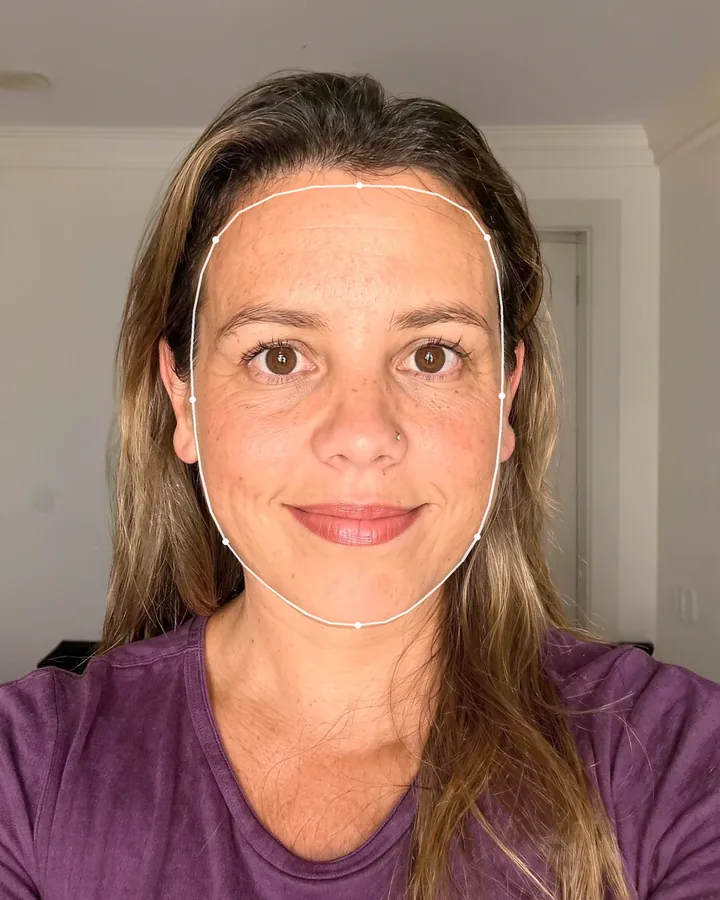
Free: your face shape, your strengths and your first tips, in plain words.

See how many more tips are waiting for you. Unlock them only if you want them.
Start with one selfie
Your face shape and what suits you, free.
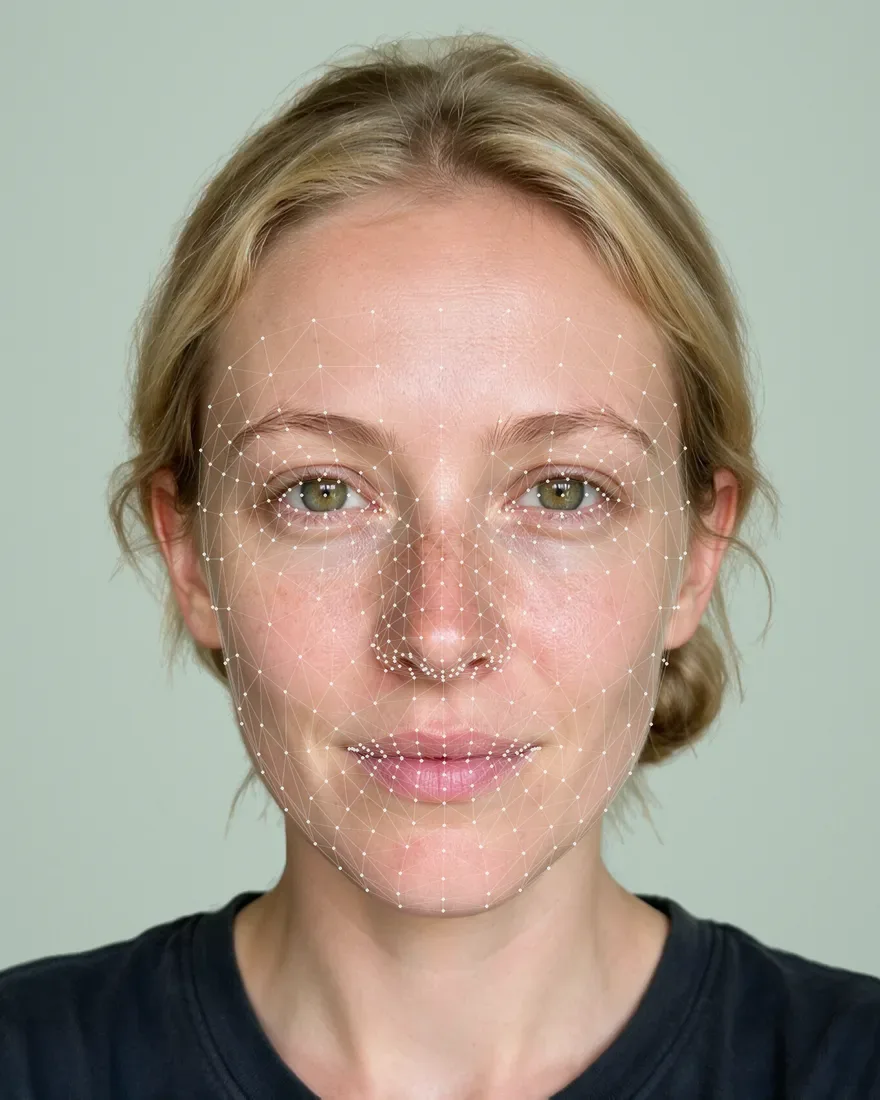
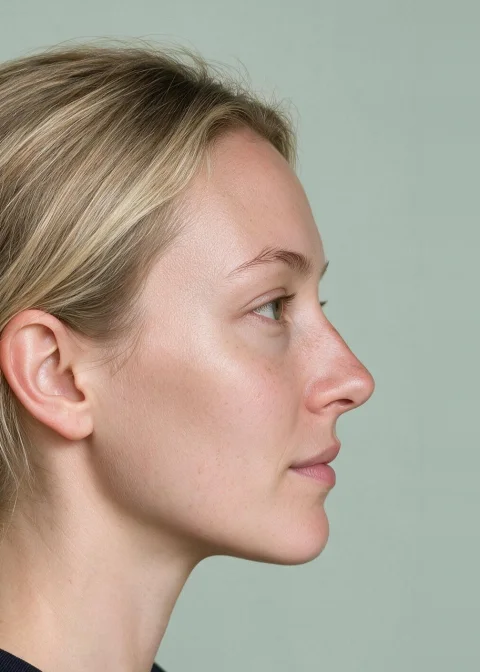
Every point of your face mapped from one selfie, plus a side photo for your profile.
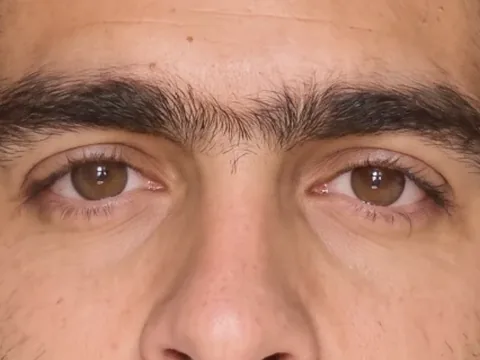
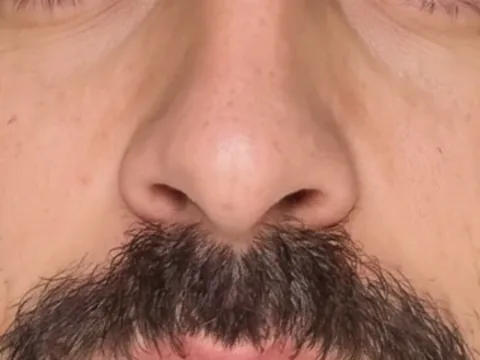
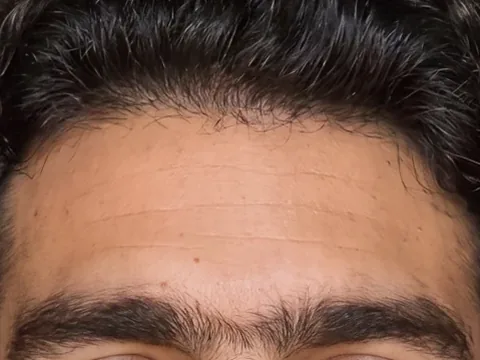
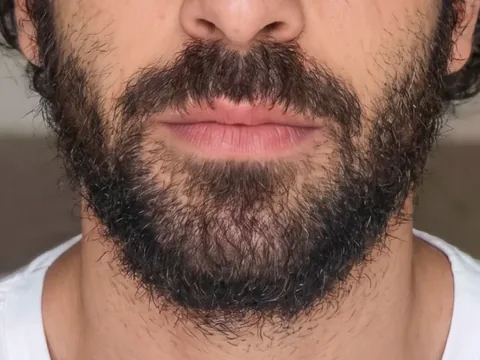
Twelve regions of your face measured, from brows to jawline, plus the age your face reads as.


Hair, brows and skin changed on your photo. Your bone structure stays as it is.


The cuts that suit your face shape, side by side.


Brow shape, beard length and makeup picked for your features.

Hair, skin and grooming steps to follow for 90 days, made for your face.
$29
$59 Recommended
$119
One payment, no subscription. Every report is checked by our team and ready within 24 hours.
Where your chin sits next to a line from your forehead through the base of your nose: behind it, on it or in front of it.
Not the line itself. Your forehead, nose and chin are set by bone and cartilage, so exercises don't move them. Hair at the back of your head and, for men, a beard at the chin change how your profile looks.
A straight line from the tip of your nose to the front of your chin. In many faces the lips sit a little behind it. The original targets came from European faces, so lips that reach the line can be normal for you. You can check yours with the E-line calculator.
Yes. From the side, people see your whole head. A flat, very short back makes the nose and chin stand out more; some length at the crown balances it.
We read one angle from three points: your forehead, the base of your nose and your chin. If your chin sits on the line from your forehead through your nose base, the angle is 180°; the further back the chin sits, the smaller it gets. Below: where yours sits next to the published figure, how exact a phone photo can be, what changes how your profile looks, how to take a good side photo, and our sources.
Facial convexity 168° ± 4° · a straight line is 180°
Shaded: the typical range, 164°–172° (Legan & Burstone 1980). Under the line: the four types this page names, with yours filled.
Orthodontists judge a side profile by how the forehead, the base of the nose and the chin line up, not by one feature (Arnett et al. 1999; Ricketts 1968). The line runs glabella → subnasale → pogonion. This tool reads that one angle. The jaw corner is left out because in a phone photo it usually sits under hair, the ear or soft tissue. The angle under the chin is left out because in one photo it mostly shows how you held your head.
glabella → subnasale → pogonion)How far back your chin sits from a line through your forehead and the base of your nose. Norm: about 168° ± 4° (Legan & Burstone 1980), one norm for men and women. On a straight line it would be 180°; the further the chin sits back, the smaller it gets.Convexity = ∠(glabella, subnasale, pogonion) on the face side
Here is the one measurement this tool reads, and the figure the study gives.
| Measurement | Figure | What it measures |
|---|---|---|
| Facial convexityLegan & Burstone (1980) | 168° ± 4° (164°–172°), men and women | How far back your chin sits from a line through your forehead and the base of your nose. A straight line is 180°. |
Any dot can be dragged, and a dot a few pixels off moves the angle. We measured it on the example man's photo (960 × 1200 px) by moving each point in every direction. The base of the nose moves the angle the most.
That is why the answer is a type in words, never a decimal. The types are wide on purpose: chin sits back below 160°, chin slightly back from 160° to 176°, chin in line from 176° to 182°, chin forward above 182°. These bands are ours, set wider than the published norm so a small slip is less likely to change the answer. When your angle lands within 3° of an edge (1.5° on the side of the narrow in-line type), the answer says it sits between the two types and gives the tips for both. The published typical range, 164° to 172° (Legan & Burstone 1980), lies inside chin slightly back, which is why the page says most adults sit there. On your own photo the page finds you against the background (MediaPipe's selfie model, run in your browser) and follows the edge of your face: the forehead dot goes on the most forward point of your brow above the nose, the nose-base dot on the corner where your nose meets your lip, and the chin dot on the most forward point of your chin. If it can't find a side profile, you tap the three points yourself.
| Point | A tiny slip | A small slip | A bigger slip | A large slip |
|---|---|---|---|---|
| Forehead, just above the eyebrows | 5 px: up to 2° | 10 px: up to 4° | 20 px: up to 7° | 30 px: up to 11° |
| Base of the nose | 5 px: up to 4° | 10 px: up to 8° | 20 px: up to 16° | 30 px: up to 23° |
| Front of the chin | 5 px: up to 2° | 10 px: up to 4° | 20 px: up to 9° | 30 px: up to 13° |
Your forehead, nose and chin are set by bone and cartilage, so exercises don't move them. Two everyday changes do affect how your profile looks from the side:
From the side, people see your whole head. Some length at the crown and back balances the side view; a flat, shaved back makes the nose and chin stand out more.
If your chin sits back or slightly back, a beard kept a little longer at the chin brings it forward. If your chin already sits forward, keep it short there. A shaved neck keeps the line under the chin clear.
If you hold your phone in your hand at arm's length (30 cm) and twist your neck sideways to take a profile photo, two errors ruin the measurement before you even start: the 24 mm wide-angle lens makes your nose look bigger, while twisting your neck pulls your chin out of its natural place. Follow these four rules. CEVO's scan reads your iris size to tell how close the camera was, and asks for a retake if the photo was taken too close.
Twisting your neck while keeping your chest facing the mirror pushes your sternocleidomastoid muscle against your throat, and pulls your chin out of its natural place. Turn your feet and shoulders 90° together.
Prop your phone on a shelf at eye level 120 to 150 cm away and switch to the 2x or 3x telephoto lens (50–85 mm equivalent).
Look straight ahead at a point on the wall at eye height so the top of your ear canal sits dead level with the bone right under your eye. Tilting your head down even a little changes the angles the camera sees.
Don't jut your lower jaw forward or purse your lips. Let your back molars touch lightly with your tongue resting on your palate so your chin and the base of your nose sit where they really are.
Ricketts RM (1968). Esthetics, environment, and the law of lip relation. American Journal of Orthodontics, 54(4), 272–289.
Arnett GW, Jelic JS, Kim J, et al. (1999). Soft tissue cephalometric analysis: diagnosis and treatment planning of dentofacial deformity. American Journal of Orthodontics and Dentofacial Orthopedics, 116(3), 239–253.
Holdaway RA (1983). A soft-tissue cephalometric analysis and its use in orthodontic treatment planning. American Journal of Orthodontics, 84(1), 1–28.
Legan HL, Burstone CJ (1980). Soft tissue cephalometric analysis for orthognathic surgery. Journal of Oral Surgery, 38(10), 744–751.
A few minutes: your face shape, your strengths and your first tips.
Start free scan